How to Comfort a Baby With an Ear Infection
Ear infections
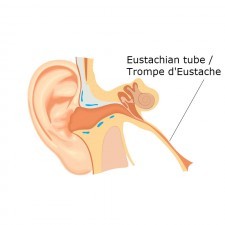
Middle ear infections are also called otitis media. They are very common, especially in children between 6 months and three years of age. They are usually non serious and aren't contagious. Most ear infections happen when a child has already had a common cold for a few days.
What causes an ear infection?
Viruses or leaner (germs) crusade middle ear infections. The eustachian tube connects the heart ear with the dorsum of the throat. Germs travel from the back of the throat when the eustachian tube is bloated from a common cold, causing infection in the heart ear.
Who is at higher risk for ear infections?
- Children less than 5 years old, because they have shorter eustachian tubes.
- Children who nourish daycare, because they tend to take more than colds.
- Children with allergies.
- Children who are exposed to cigarette smoke. Smoke causes inflammation of the eustachian tube, making ear infections more probable.
- Children who were not breastfed. Breast milk has antibodies that help fight infections.
- Babies who are being bottle fed, especially if they swallow milk while lying too flat. Milk can enter the eustachian tube and cause inflammation, which increases the hazard of an ear infection. Children should be held upright while drinking a canteen. When they are old enough to hold their own bottle well, they should be taught to drinkable from a regular cup (not a "sippy loving cup") and no longer given a bottle.
- Children with cleft palates, as their eustachian tubes are ofttimes inflamed.
- Children of Beginning Nations and Inuit descent, though it'southward not clear why.
How do I know if my child has an ear infection?
Older children volition commonly complain of an earache. While younger children might non be able to say they take an earache, they may:
- accept an unexplained fever,
- be fussy,
- take trouble sleeping,
- tug or pull at their ears, or
- have trouble hearing tranquillity sounds.
Some children with an ear infection may besides accept fluid draining from the ear.
How is an ear infection diagnosed?
Doctors diagnose ear infections by looking at the ear drum (tympanic membrane) with a special calorie-free called an otoscope. They look for fluid in the middle ear, at the colour and position of the ear pulsate, and monitor the pressure in the center ear. Common viral infections tin brand the ear drum look red, merely antibiotics are not needed.
How is an ear infection treated?
- If a child doesn't have too much discomfort or a high fever, the doctor will likely look 24 to 48 hours (one to ii days) to see if the ear infection gets better on its ain. If the child does not improve or gets worse, yous should accept them back to the doctor.|
- You child's physician will prescribe antibiotics if:
- your child is moderately to severely ill with a high fever (more than than 39◦C),
- your child has severe pain,
- the condition has not improved for 48 hours, or
- the ear canal has new fluid.
-
For an uncomplicated ear infection, children between 6 months and ii years ordinarily accept an antibiotic for 10 days. Children over 2 years of age will have an antibiotic for 5 days.
-
The dr. might propose acetaminophen or ibuprofen to reduce the child's hurting. But give ibuprofen if your child is drinking reasonably well. Do not give ibuprofen to babies under 6 months old without starting time talking to your doc.
-
Do not give over-the-counter medications (ones you can buy without a prescription) to babies and children under vi years without first talking to your physician. The only exceptions are medications used to treat fever, such as ibuprofen and acetaminophen.
Children normally feel better inside 1 day of starting an antibiotic. Your md might desire to see your child once again to be sure the infection has cleared up completely. Fluid tin remain in the middle ear without inflammation for a few weeks.
When do children need tubes in their ears?
If your kid has frequent ear infections, or if he has trouble hearing considering of ongoing fluid in the center ear, he may need a tube inserted through the ear drum and into the middle ear. The tube helps to keep air pressure level normal on both sides of the ear drum and helps fluid drain from the middle ear.
Putting tubes in requires a brief functioning by an ear, olfactory organ and pharynx surgeon. Children usually become dwelling the aforementioned 24-hour interval.
When should I call the medico?
Call your doctor if you remember your kid has an ear infection AND:
- has other serious medical bug,
- seems ill,
- vomits over and over,
- is younger than 6 months onetime,
- is older than half dozen months old and has had a fever for more than than 48 hours,
- has swelling behind the ear,
- is very sleepy,
- is very irritable,
- has a skin rash,
- isn't hearing well or at all,
- remains in a lot of hurting despite at least i dose of acetaminophen or ibuprofen, or
- still has an earache afterwards 2 days of handling with acetaminophen or ibuprofen.
How can I forbid my kid from getting an ear infection?
- Wash your child's hands and your ain oftentimes to reduce the chance of communicable a cold.
- If possible, breastfeed your baby.
- Avert canteen-feeding your baby when they are lying down. Never put your baby to bed with a bottle.
- Transition your babe from a bottle to a cup by 1 year of age.
- Don't utilise a pacifier (soother) too oftentimes.
- Don't smoke, and continue your child away from any secondhand smoke. Exposure to smoke tin can increase the risk of ear infections.
- Ensure your child gets the pneumococcal vaccine (if they are at to the lowest degree two months of age, and have not already had this shot).
- Ensure your child gets a flu shot every year.
Reviewed by the following CPS committees
- Infectious Diseases and Immunization Committee
Last updated: January 2016
Source: https://caringforkids.cps.ca/handouts/health-conditions-and-treatments/ear_infections
0 Response to "How to Comfort a Baby With an Ear Infection"
Enregistrer un commentaire