Cedar Sticks for Art and Craft Which Stores Sells Them?


- Traditional Arts and Crafts
Traditional Arts and Crafts
Pop Culture
Traditional Arts and Crafts
Handicrafts
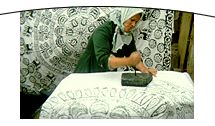 Handicrafts have been around since man's earliest days in accordance with the prevailing ecology weather condition. The start examples were necessities such as protection or coverings. Handicrafts were later on improved and adapted according to ecology weather, eventually becoming "traditional" and accepted as an fine art that reflects the artistic sense, feelings and cultural characteristics of a society.
Traditional Turkish handicrafts class a rich mosaic past bringing together genuine values with the cultural heritage of the unlike civilizations which take passed through Anatolia over the millennia.
Traditional Turkish handicrafts include; rug-making, rug-making, sumac, cloth-weaving, writing, tile-making, ceramics and pottery, embroidery, leather industry, instrument-making, masonry, copper work, basket-making, saddle-making, felt-making, weaving, woodwork, cart-making etc.
Weaving materials in traditional Turkish handicrafts consist of wool, mohair, cotton, bristles and silk.
 Weaving can be done with all kinds of fabric, and produces plaits, carpets, rugs and felt obtained by spinning thread, connecting the fibers together or by other methods.
Weaving is a handicraft which has been practiced in Anatolia for many years and considered as a hateful of earning a livelihood.
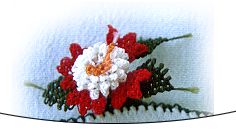
Embroidery, a unique instance of Turkish handicrafts, is not only used for ornament but too as a means of communication tool with the symbolism in its designs. Today, embroidery made with tools such equally the crochet needle, needle, shuttle and hairpin designed either as a border or motif, and goes by different names according to the implement used and the technique. These include; needle, crochet needle, shuttle, hairpin, silk cocoon, wool, candle stick, bead and left-over textile. Embroidery is generally seen in the provinces of Kastamonu, Konya, Elazığ, Bursa, Bitlis, Gaziantep, İzmir, Ankara, Bolu, Kahramanmaraş, Aydın, İçel, Tokat and Kütahya, although it is gradually losing importance and becoming restricted to trousseau chests.
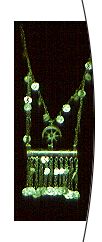
Along with embroidery used in traditional costumes, jewellery is also commonly used every bit an accessory. All the civilizations which accept existed in Anatolia have produced artistic works made from precious or semi-precious stones and metal. Turkoman jewellery is an excellent example of genuine methods that were brought to Anatolia past the Seljuks. In the Ottoman period, jewellery gained importance in parallel to the development of the empire.
 In the Bronze Age in Anatolia, bronze obtained by mixing tin with copper, and materials such every bit copper, aureate and argent were besides wrought and cast. The most used fabric is copper. Various techniques, such as casting, scraping, savaklama, küftgani, ajir kesme and kazima were used. There are also dissimilar techniques for working other materials such as brass, gold, silver, and today these handicrafts are trying to be kept live today by using high quality workmanship and a diversity of designs. Copper, the commonest metal used today, is still used for kitchen utensils by plating it with tin.
Architecture, whose origins lie in a need to provide permanent shelter, has also changed and adapted in accordance with local environmental conditions. This development led to wood carving gaining its unique characteristics during the Seljuk flow. Seljuk woodworking crafts include extraordinary, high-quality workmanship, the commonest products nigh common beingness mosque niches, mosque doors and cupboard covers. In the Ottoman period, these techniques were greatly simplified and practical mostly to objects in daily use, such equally tripods, wooden stands for quilted turbans, writing sets, drawers, chests, spoons, thrones, rowing boats, low reading desks, Koran covers and architectural works such equally windows, wardrobe covers, beams, consoles, ceilings, niche indicating the direction of Mecca, pulpits and coffins.
 The materials used in woodworking were mostly walnut, apple, pear, cedar, ebony and rosewood. Wooden objects were created past such techniques such as tapping, painting, relief-engraving, caging, blanket and burning, and these are still employed today. The use of walking sticks became popular in the 19th century, and these are notwithstanding populare and made by the same methods in the provinces of Zonguldak, Bitlis, Gaziantep, Bursa, İstanbul-Beykoz and Ordu provinces. While the handles of walking sticks are made of materials such as silver, gold and bone, the sticks themselves are usually made of rose, cherry-red, ebony, bamboo and reed.
Making musical instruments has been a tradition for many long years. These are made from materials such as trees, plants and the skin, bones and horns of animals, and are classified into string, percussion and woodwind groups.
Some other art form is glazed earthenware tiles, which were brought to Anatolia by the Seljuks. Seljuk artists were particularly successful at creating animate being designs. The glazed earthenware tiles initiated in the 14th century in İznik, in the 15th century in Kütahya and in the 17th century in Çanakkale, made a posıtıve contributıon and brought new interpretations to Ottoman ceramic and glazed earthenware tile art. Between the 14 and 19th centuries, Turkish glazed earthenware tiles and ceramic art became world famous for their boggling creative workmanship.
The most distinctive examples of the glasswork of Anatolian civilizations illuminate the development of the history of glass piece of work. Stained glass in different models and forms was developed by the Seljuks. In the Ottoman Empire, after the conquest of Istanbul, the urban center became the glasswork centre. Çeşmi-i Bülbül and Beykoz piece of work are examples of techniques that withal survive today.
 The first product of glass in the form of a bead to ward of the evil eye was carried out by adept craftsmen in the village of Görele in the province of Izmir. It is possible to run into beads for warding off the evil eye in every corner of Anatolia. It is believed that the malicious glances aimed at living things or objects tin can be averted by using these amulets. Amulets made of bead to ward off the evil eye are therefore put in places where everyone tin can see them hands.
Stonework plays an of import part in exterior and interior ornamentation in traditional compages. In addition to architecture, gravestones are other examples of stonework. Techniques such every bit carving, relief and inscription are applied to gravestones. The ornamental motifs used are plants, geometric motifs, writing and figures. Animal figures are less mutual. Man figures can be found in Seljuk menstruation art.
Basket-making is carried out by weaving reed, willow, and nut branches in a way that has come down from our ancestors. It is now used for home ornament in addition to its original purpose of helping to carry things.
Packsaddles made of felt and rough fabric formed a sub-branch of traditional artwork during the menstruation when saddles were commonly used in rural areas.
As a result of irresolute living conditions, and specially industrialisation, the production of these has now pretty much ceased birthday.
Past order of the Folk Culture Research and Development General Directorate, area inspections of handicrafts and expert producers are carried out each twelvemonth. In these studies, works of art are photographed and recorded for the athenaeum, which are available for use by scientists, experts and students interested in the field.
 In club to promote handicrafts, the General Directorate holds exhibitions making use of this archive both within and outside Turkey. Again with the support of the General Directorate, regional handicraft exhibitions are arranged for the purposes of promotion and to help artists to discover markets for their products.
The General Advisers also holds an "International Folk Civilization Congress" once every five years. Papers delivered at this congress and other manufactures from scientific meetings on this subject field are published by the directorate.
All studies on handicrafts are also published.
- Decorative Turkish Arts
- Traditional Arts Using Metal
- Traditional Arts Using Clay
- Traditional Arts Using Wood
- Traditional Arts Using Stone
- Traditional Arts Using Glass
- Traditional Arts Using Beast Materials
- Traditional Arts Using Plant Fibers
- Embroidery
- Knitwear
- Weaving
- Tightening Works (weaving without tissue-felt)
- Mitt-Fabricated Dolls
- Craftsmen
- Colour, Pattern and Painting in Traditional Arts
Source: https://www.ktb.gov.tr/EN-98709/traditional-arts-and-crafts.html
0 Response to "Cedar Sticks for Art and Craft Which Stores Sells Them?"
Enregistrer un commentaire